



What We Know About the Link Between Pesticides and PD
Just like every chronic disease, the risk of developing Parkinson’s disease is due to a combination of genetic and environmental factors. About twenty genes have been identified that are associated with an increased PD risk and research into these and other genetic mutations is ongoing.
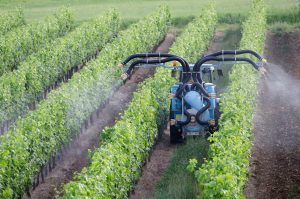
Recently, there has been an increased amount of attention paid to the environmental factors that may increase PD risk. There is mounting evidence that exposure to paraquat, an herbicide used in agriculture, can contribute to PD risk. Paraquat is already banned in 70 countries around the world due to associations with neurological diseases and possibly cancer, but it is still permitted in the US. Recently, environmental groups, agricultural workers groups and Parkinson’s disease advocates have sued the Environmental Protection Agency (EPA) after it issued an interim re-approval for paraquat. This advocacy work is ongoing.
In addition, exposure to trichloroethylene, used mostly in manufacturing as a solvent for degreasing metal parts as well as in the manufacturing of other chemicals, has been linked to an increase in PD risk as well. It is more than likely that additional chemicals in our environment, ones that may not have been studied yet, impact risk of PD too. Living in a modern society means being exposed to a variety of chemicals whose risks we don’t completely understand.
What recent research tells us about pesticides exposure and Parkinson’s
For decades, scientists have modelled PD in the laboratory by directly injecting animals with chemicals such as paraquat and the insecticide rotenone, making it clear that these chemicals can be neurotoxic. However, whether these chemicals increase PD risk in people via standard agricultural exposure is a different question, requiring large scale studies of people who live or work near agricultural areas, or who handle pesticides professionally
Indeed, such epidemiological studies have been done. While not all the studies performed have consistent results on the increased risk of paraquat, many do support a link. For example, a recent paper presented data of paraquat exposure of 829 PD patients as compared to 824 community controls. Working or living working near areas in which paraquat was used, as well as higher intensity of exposure to paraquat use, were all associated with an increased risk of developing PD.
In the brain, these chemicals can trigger harmful processes such as:
- Oxidative stress that causes harmful free radicals to damage neurons.
- Mitochondrial dysfunction, which impairs the cell’s ability to produce energy.
- Inflammation, which leads to ongoing neuron injury and death.
It is important to note that not everyone exposed to these chemicals will develop PD and the risk will vary depending on the intensity and timing of exposure. As noted above, there are many factors in the environment whose association with PD we are not aware of, including factors that may reduce the risk. There remains a great need for research into understanding the molecular mechanisms by which these and and other chemicals affect PD risk.
How and When Exposure Happens
Pesticide exposure can happen outside of an agricultural setting as well. Different routes in which people can encounter pesticides include the following:
- Occupational exposure, such as farmers, groundskeepers, or pesticide applicators who handle or mix products regularly.
- Environmental exposure, from living near agricultural land, orchards, or golf courses where heavy pesticide spraying occurs.
- Household exposure through products used on lawns, gardens, or even in pest control around the home.
A recent 2025 study published in JAMA found that people living closer to golf courses (1-3 miles) had a higher risk of PD. This study, while correlative, suggests that indirect exposure (air, soil, or water) can also play a role in the development of this disease.
Timing also matters. Research suggests that chronic, low-level exposure over many years may be just as damaging as more concentrated events with a shorter exposure window. It is also possible that timing of the exposure is important, with early-life or mid-life exposure setting the stage for later neurodegeneration, especially in people who already carry genetic risk factors.
Genes and Environment
It is important to be aware that genetic and environmental factors can work together to affect PD risk, as the risk of PD often comes from a complex interaction between genetic susceptibility and environmental triggers.
Some people inherit genetic variants—such as those in the GBA1 or LRRK2 genes—that make neurons more vulnerable to stress and toxins. When these individuals are exposed to pesticides, the combined effect can dramatically increase their lifetime PD risk.
This area of research, known as gene-environment interaction, is expanding rapidly. Researchers are using complex modeling systems to understand why two people with the same exposure history might experience very different outcomes—one developing PD, and the other not, and these differences may be tied to each person’s genetic background.
How Pesticides Might Influence Parkinson’s Disease Progression
Emerging evidence suggests that pesticide exposure may not only contribute to developing PD but could also influence how fast it progresses.
A recent occupational pesticide exposure study found that people with PD who reported prior pesticide exposure experienced faster worsening of motor and cognitive symptoms than those without such exposure. It is important to note that this link was determined to be associative and not statistically significant. This will still need to be tested in a larger group of individuals to draw more accurate conclusions about this association. While more work is needed to confirm this link, it reinforces the idea that minimizing exposure is important not just for prevention, but also for long-term disease management.
Researchers are exploring whether pesticides can accelerate the spread of alpha-synuclein, a protein that misfolds and clumps in the brains of people with PD. In animal models, exposure to certain pesticides increases this clumping process, suggesting a biological pathway connecting environmental toxins to hallmark PD pathology.
What We Still Don’t Fully Know
Despite decades of research and growing evidence, several key questions remain unanswered:
- Causation vs. correlation: While pesticide exposure clearly increases risk, it definitely does not mean that every exposed person will develop PD—or that every PD case involves pesticide exposure.
- Dose and duration: Scientists still can’t define a clear “safe threshold” for exposure. Both high-dose and long-term low-dose exposures appear risky.
- Chemical mixtures: Real-world exposures often involve multiple pesticides at once, making it hard to pinpoint which combination is most harmful.
- Individual differences: Age, genetics, occupation, and even lifestyle factors like diet and exercise may modify risk—but exactly how remains uncertain.
- Intervention impact: We know prevention matters, but there are still few studies proving that reducing exposure lowers PD incidence or slows its progression.
These gaps highlight the urgent need for continued research. Long-term studies that track both exposure and outcomes across large populations are the most useful forms of collective evidence, but these types of studies are very difficult to conduct.
What You Can Do to Protect Yourself
While scientists continue to study the exact mechanisms in which environmental exposure contributes to PD risk, there are practical ways individuals and communities can act now to reduce pesticide-related risks.
For individuals:
- Limit or avoid pesticide use around the home and garden whenever possible.
- If you must use pesticides, follow all safety instructions carefully, use protective clothing and gloves, and avoid windy conditions that cause drift.
- Wash fruits and vegetables thoroughly to remove residue.
- Choose organic produce when feasible.
- Be aware of your work or home environment: if you live near agricultural fields or golf courses, consider air filtration indoors and avoid contact with runoff water.
For communities and policymakers:
- Support integrated pest management (IPM) programs that minimize chemical use.
- Advocate for stricter pesticide regulation and stronger worker protections.
- Encourage pesticide monitoring in local water and soil, especially in agricultural regions.
Taking just some of these steps to reduce exposure can have meaningful long-term benefits for not only your PD risk, but for overall health and environmental safety as well.
APDA’s Chief Public Policy Officer Anne Hubbard is working hard to help push through a legislative ban on paraquat and other neurotoxins. Stay tuned for ways in which you can help this effort.
Tips & Takeaways
- The evidence connecting pesticides and PD continues to grow, yet many questions remain about how these exposures cause damage, who is most at risk, and what interventions truly make a difference.
- Long-term or high-level exposure to certain pesticides (like paraquat and rotenone) is linked to an increased risk of PD.
- These chemicals damage dopaminergic neurons through oxidative stress, inflammation, and mitochondrial dysfunction.
- Both occupational and environmental exposure contribute to risk, sometimes even years before symptoms appear.
- Genetic factors can amplify vulnerability to pesticide-related damage.
- Reducing exposure is a practical and proactive step to mitigate risk.
- Community-level change through regulation, monitoring, and awareness remains essential to lowering population-wide risk.
This blog was written by Clark Jones, PhD, and was reviewed, edited, and approved by Dr. Rebecca Gilbert.